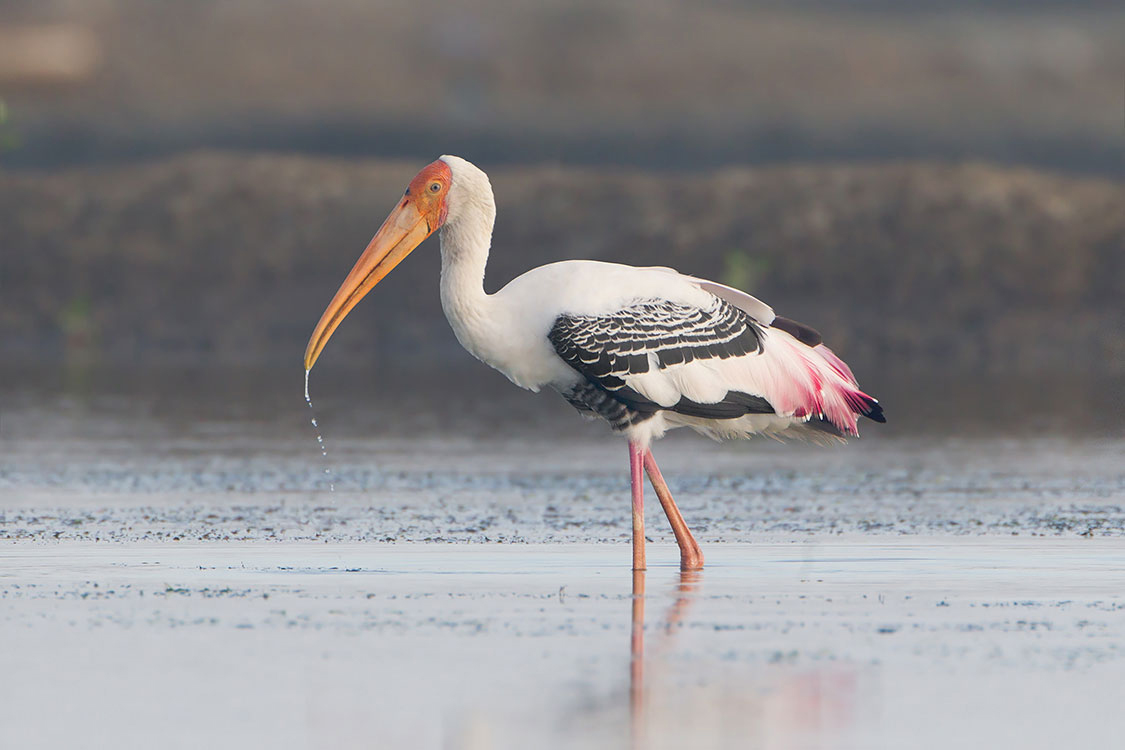

The Painted stork is one of the most beautiful and recognizable wetland birds found across India. With its striking pink feathers, black-and-white wings, and long yellow beak, it stands out easily in lakes, rivers, and marshes.
Appearance That Stands Out
Painted storks get their name from the pink coloration on their wings, which looks as if it has been painted. Their long legs help them wade through shallow water, while their slightly curved yellow beak is perfectly adapted for catching prey.
Unique Feeding Technique
Unlike many birds that rely on sight, painted storks use a fascinating method to find food. They keep their beak partially open in water and move it side to side. The moment they sense movement, they snap their beak shut and catch fish instantly. This method is highly efficient and works even in muddy water where visibility is low.
Habitat and Distribution
Painted storks are commonly found in wetlands across the Indian subcontinent. They prefer shallow water bodies such as lakes, marshes, and flooded fields where fish are abundant. One of the well-known places to spot them is Nandur Madhyameshwar Wildlife Sanctuary, which is famous for its rich birdlife.
Social and Nesting Behavior
These birds are highly social, especially during the breeding season. They nest in large colonies, often on trees near water bodies. A single tree can host dozens or even hundreds of nests. Both parents take part in feeding the chicks, usually by regurgitating food.
Adaptation to Heat
Painted storks have an unusual but effective way to stay cool in hot climates. They use a process called urohidosis, where they excrete on their legs. As the liquid evaporates, it helps reduce body temperature.
Flight and Movement
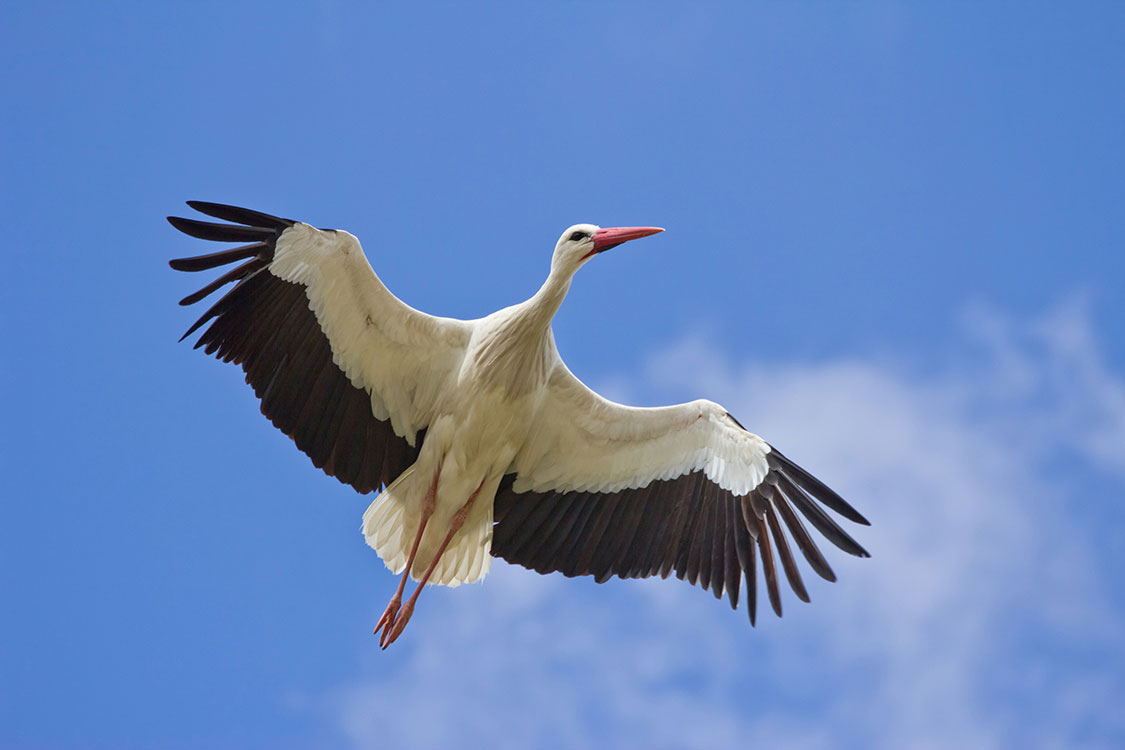
Despite their large size, painted storks are graceful flyers. They soar high in the sky using warm air currents, conserving energy by gliding rather than constantly flapping their wings.
Ecological Importance
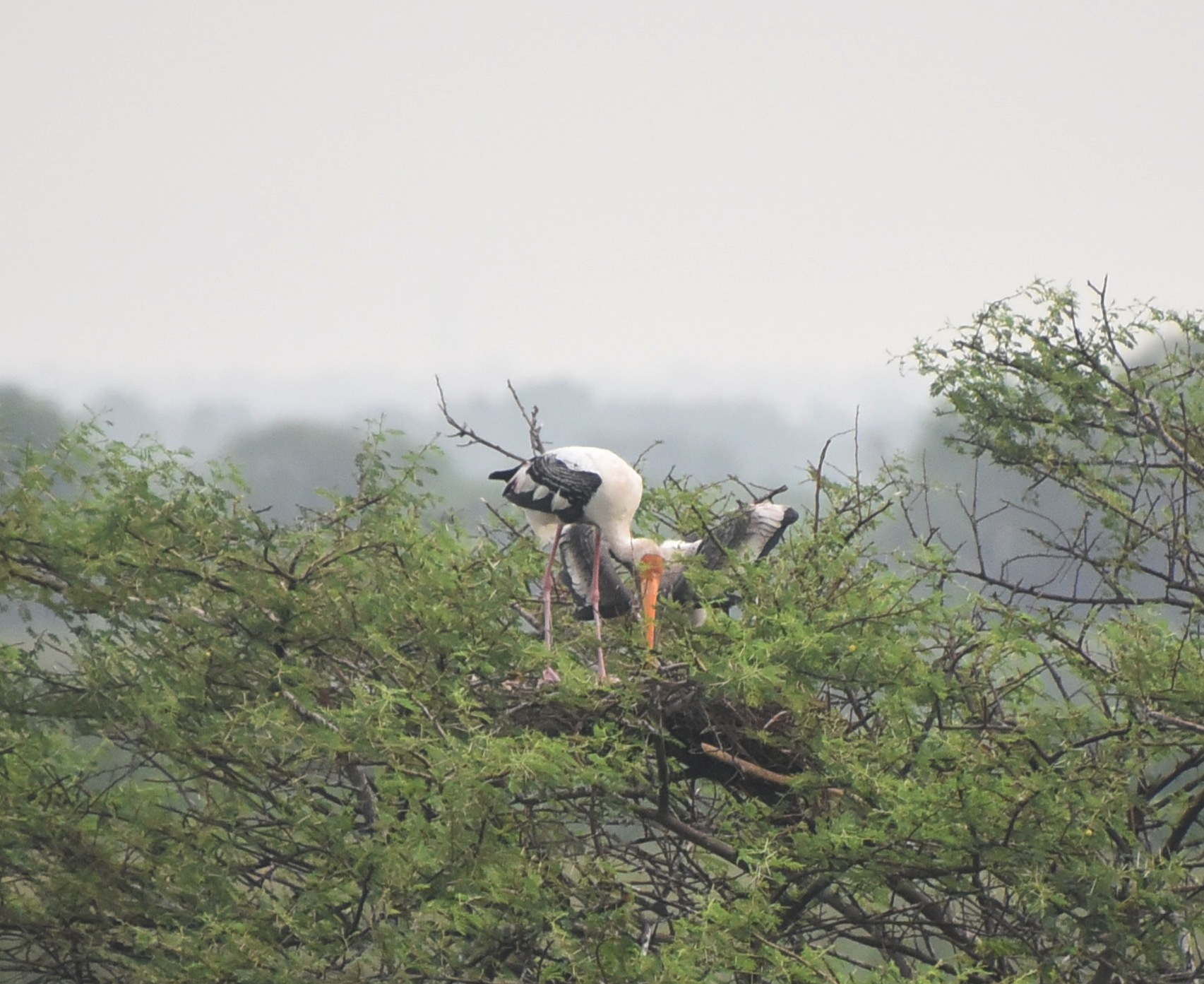 Painted storks play an important role in maintaining the balance of wetland ecosystems. By feeding on fish and aquatic organisms, they help regulate populations and indicate a healthy environment.
Conservation Status
The painted stork is currently listed as Near Threatened. The main threats include habitat loss, pollution, and disturbance in breeding areas. Protecting wetlands is essential for ensuring the survival of this species.
Conclusion
The painted stork is not just a beautiful bird but also an important part of India’s wetland ecosystem. Its unique feeding style, social behavior, and adaptability make it a fascinating species to observe in the wild.